
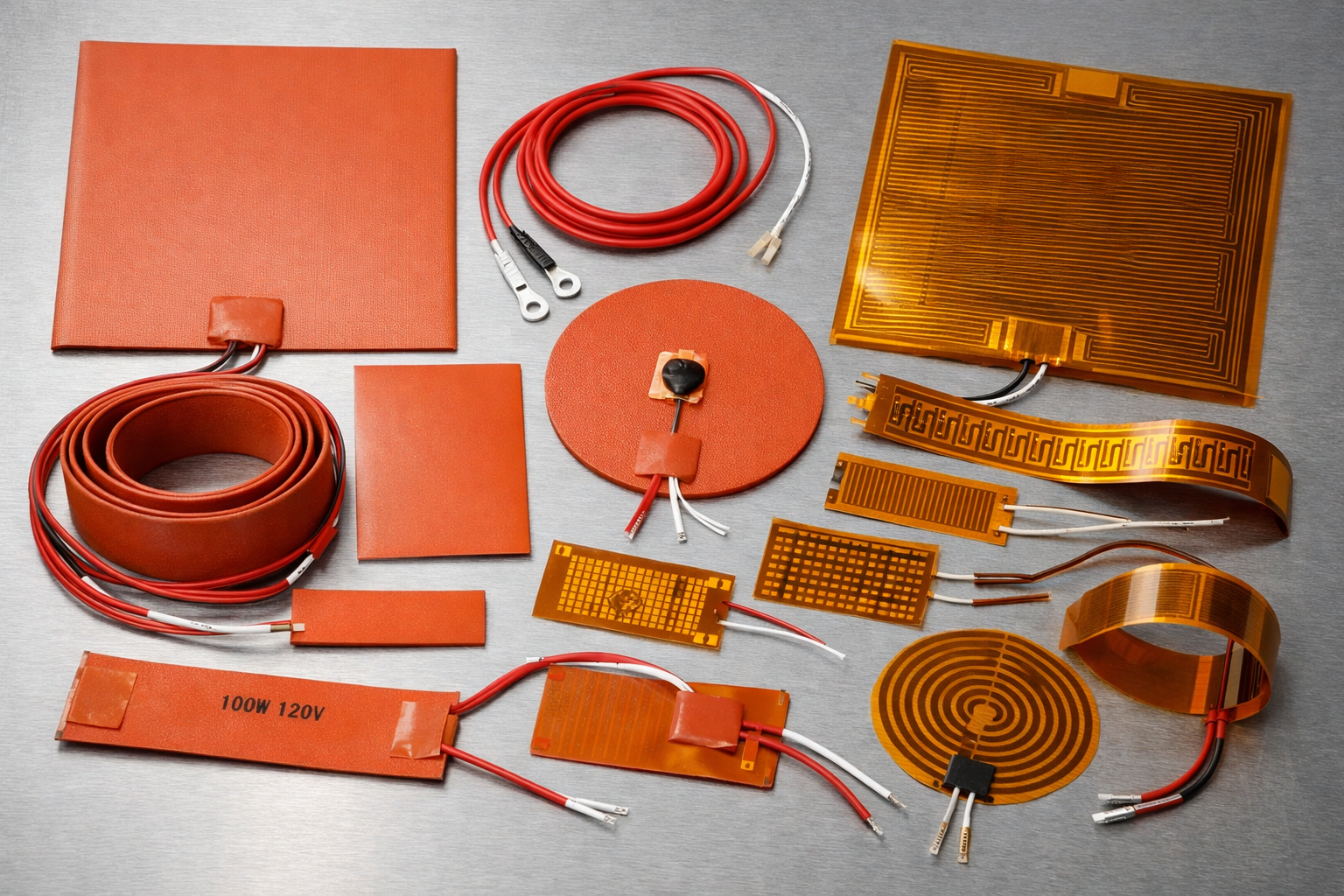
Flexible heaters represent a modern solution to evolving heating challenges. With their customizable designs, ability to provide uniform heating, and lightweight construction, they offer a powerful combination of performance and versatility.
Lightweight flexible heaters come in several material types, and the choice between polyester, polyimide, Teflon (PTFE) and silicone rubber largely depends on temperature range, durability, flexibility, and environment. Here’s a clear breakdown of how they differ:
POLYESTER (PET) FLEXIBLE HEATERS
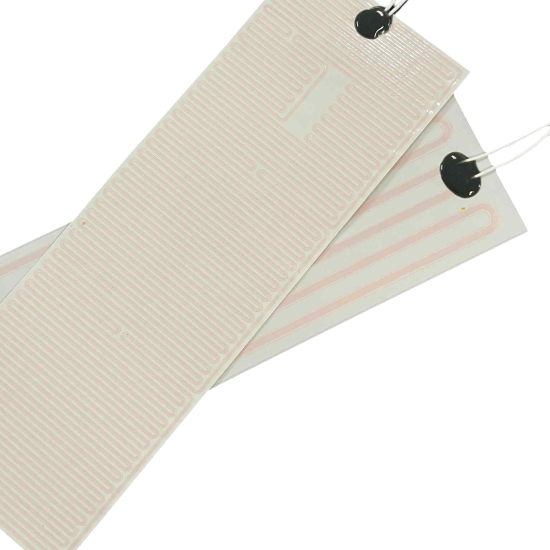
Best for: Low-cost, low-temperature applications.
- Temperature range: Typically up to ~125°C
- Flexibility: Very flexible and thin
- Durability: Moderate; not ideal for harsh environments
- Moisture/Chemical resistance: Limited
Key advantages:
- Utilizes FR-V0 materials for flame retardancy and self extinguish rating
- Cost-effective for high-volume applications
- Great for simple, flat surfaces and maintaining optimum performance temperature
- Easy to manufacture with adhesive backing
Common uses: Consumer electronics, frost protection, battery warming in mild conditions
POLYIMIDE (KAPTON) FLEXIBLE HEATERS
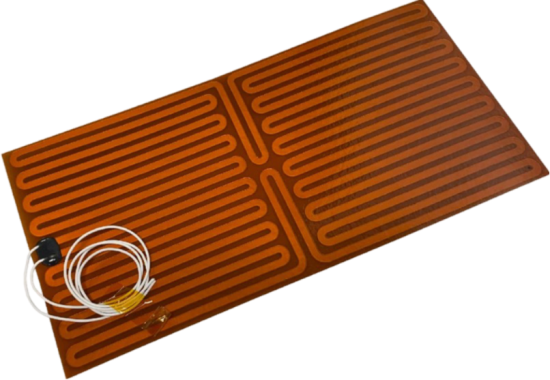
Best for: High-performance, high-temperature, precision applications
- Temperature range: Up to ~150°C
- Flexibility: Excellent, even in very thin profiles
- Durability: High; resistant to vibration and wear
- Moisture/Chemical resistance: Good
Key advantages:
- Handles extreme temperatures
- Very thin and lightweight
- Excellent dielectric strength (great for electronics)
- Performs well in vacuum environments
Common uses: Aerospace systems, medical devices, semiconductor equipment
TEFLON (PTFE) FLEXIBLE HEATERS
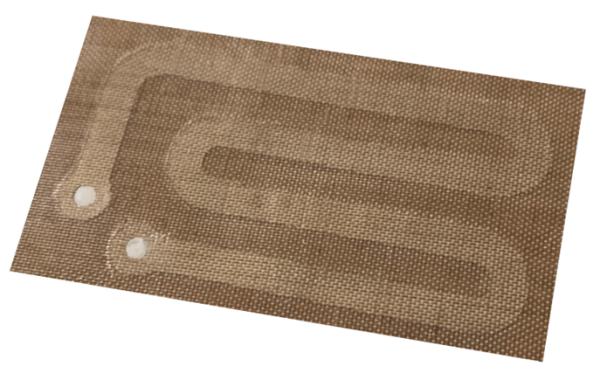
Best for: Harsh chemical environments and extreme conditions
- Temperature range: Typically up to ~225°C
- Flexibility: Less flexible than polyester or polyimide
- Durability: Excellent in harsh conditions
- Moisture/Chemical resistance: Outstanding
Key advantages:
- Superior chemical resistance
- Non-stick surface
- Performs well in corrosive or wet environments
Common uses: Industrial processing, food & beverage equipment, chemical handling systems
SILICONE RUBBER HEATERS
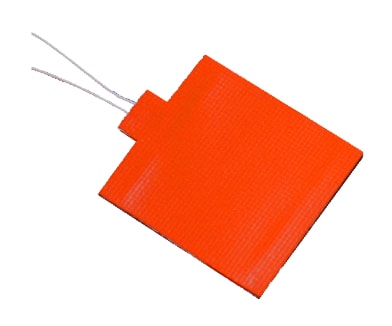
Best for: Repeated use and harsh conditions
- Temperature range: Typically up to ~235°C
- Flexibility: Thicker than polyimide
Key Advantages:
- Durable, non-reactive and long-lasting
- Moisture & chemical resistant
- Less expensive than other materials
Common Uses: Rugged, industrial, or outdoor environments
QUICK COMPARISON
| Polyester (PET) | Polyimide (Kapton) | Silicone Rubber | PTFE (Teflon) | |
| Max Temp | Low (~120°C) | Very high (~260°C) | High (~200–235°C) | High (~260°C) |
| Flexibility | Excellent | Excellent (ultra-thin) | Very good (but thicker) | Moderate |
| Thickness | Very thin | Ultra-thin | Medium thickness | Medium |
| Durability | Low–moderate | High | Very high | Very high |
| Chemical Resistance | Low | Moderate–good | Good | Excellent |
| Moisture Resistance | Low | Good | Excellent | Excellent |
| Best Use Case | Consumer electronics | Aerospace, medical, electronics | Industrial, outdoor, heavy-duty | Chemical processing, food equipment |
Bottom Line:
- Choose polyester when cost matters and temperatures are low.
- Choose polyimide when you need high performance, thinness, and heat resistance.
- Choose Teflon (PTFE) or Silicone Rubber when the environment is chemically aggressive or demanding.
TurboFlex Heaters can recommend the best option for your specific application (temperature, environment, surface shape). Contact us today.